Etsy vs Shopify: Which Fees Are Better?
Choosing where to sell your handmade items matters. Etsy and Shopify are two popular choices. But their fees work very differently.
This guide breaks down the costs in simple terms. No confusing jargon. Just clear facts to help you decide.
How Etsy Fees Work
Etsy charges fees when you list and sell items. You do not pay a monthly fee to have a shop.
Here are the main Etsy fees in 2026:
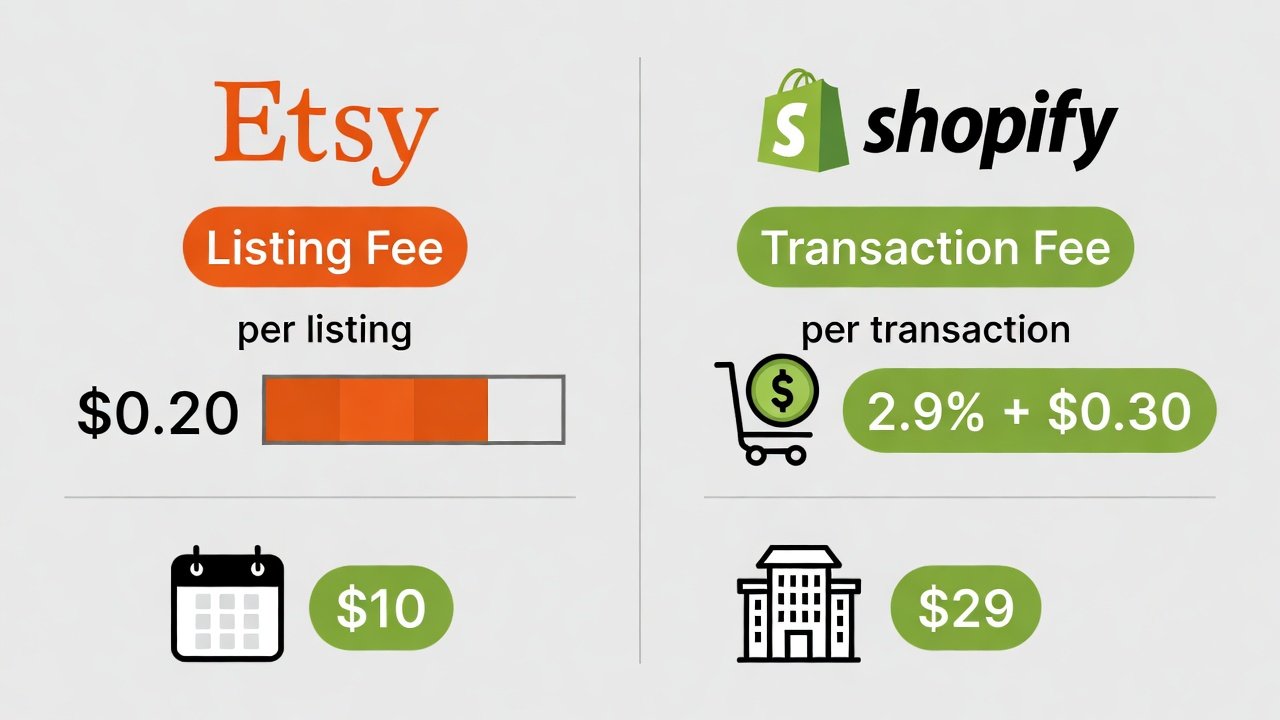
- Listing fee: $0.20 per item, lasts 4 months
- Transaction fee: 6.5% of item price plus shipping
- Payment processing: 3% + $0.25 in the US (varies by country)
- Regulatory fee: Small percentage in some countries
- Offsite Ads: 12-15% if Etsy ads make a sale (optional for small sellers)
You only pay when you take action. List an item? Pay $0.20. Make a sale? Pay the percentage fees.
How Shopify Fees Work
Shopify charges a monthly subscription fee. You pay this even if you sell nothing that month.
Here are the main Shopify costs in 2026:
- Basic plan: $29 per month
- Transaction fee: 2.9% + $0.30 per online sale (if using Shopify Payments)
- Extra fee: 2% more if you use a payment provider outside Shopify
- Theme or app costs: Optional, but many sellers spend $10-50/month
Your monthly bill stays the same. But you keep more of each sale compared to Etsy.
Real Example: Selling a $40 Item
Let's compare costs for one $40 sale with $8 shipping. Total order: $48.
Etsy Cost Breakdown (US Seller)
Listing fee: $0.20 (one time)
Transaction fee: $48 × 6.5% = $3.12
Payment processing: ($48 × 3%) + $0.25 = $1.69
Total Etsy fees: $5.01
You keep: $48 - $5.01 = $42.99 (before materials and time)
Shopify Cost Breakdown (Basic Plan)
Monthly fee: $29 (spread across all your sales)
Payment processing: ($48 × 2.9%) + $0.30 = $1.69
If you make 20 sales that month, the $29 monthly fee equals $1.45 per sale
Total Shopify fees per sale: ~$3.14
You keep: $48 - $3.14 = $44.86 (before materials and time)
When Etsy Costs Less
Etsy is cheaper if you sell only a few items per month. You pay no monthly fee. You only pay when you list or sell.
Example: If you sell 5 items a month, Etsy fees might total $25. Shopify would cost $29 plus transaction fees. Etsy wins here.
Etsy also brings customers to you. You do not need to spend time or money on marketing. This hidden value matters for new sellers.
When Shopify Costs Less
Shopify becomes cheaper as your sales grow. The $29 monthly fee gets spread across more orders.
Example: If you sell 50 items a month, the $29 fee equals just $0.58 per sale. Etsy would charge $0.20 listing plus 6.5% on each one.
Shopify also lets you keep customer data. You can email buyers and build loyalty. This helps you sell more over time.
Hidden Costs to Consider
Both platforms have costs beyond the basic fees. Plan for these too.
Etsy Hidden Costs
Competition is high. Your item may get lost among millions of listings. Some sellers pay for Etsy Ads to stand out. This adds 10-30% to costs.
You also follow Etsy's rules. They can change policies or suspend shops. You have less control over your store's look and feel.
Shopify Hidden Costs
You must bring your own customers. This means spending time on social media, ads, or SEO. Or paying for marketing help.
You may also buy a paid theme ($50-200 one time) or apps ($5-30/month) to add features Etsy includes for free.
Which Platform Is Right for You?
Choose Etsy if:
- You are just starting out
- You sell 10 or fewer items per month
- You want built-in traffic and easy setup
- You do not want to handle marketing yet
- You sell handmade, vintage, or craft supplies
Choose Shopify if:
- You already have a following or customer list
- You sell 20+ items per month
- You want full control over your store design
- You plan to build a long-term brand
- You sell items that do not fit Etsy's categories
Can You Use Both?
Yes, many sellers use both platforms. List on Etsy to reach new customers. Use Shopify for repeat buyers and email marketing.
Just track your inventory carefully. You do not want to sell the same item twice on different sites.
Start with one platform. Master it. Then expand when you are ready. Growing too fast can cause stress and mistakes.
How to Calculate Your Break-Even Point
Want to know when Shopify becomes cheaper than Etsy? Use this simple formula.
Step 1: Add up your average Etsy fees per sale. For most US sellers, this is about 10% of the order total.
Step 2: Calculate your Shopify fees per sale. This is about 3% plus the monthly fee divided by your number of sales.
Step 3: Find the number of sales where Shopify total costs less than Etsy total.
For most sellers, Shopify becomes cheaper around 15-25 sales per month. But your numbers may differ. Do the math for your shop.
Tips to Save Money on Either Platform
Smart sellers reduce fees without breaking rules. Try these ideas:
- Bundle items: Sell sets instead of singles. One transaction fee instead of many.
- Raise prices slightly: Add 5-10% to cover fees. Most customers do not notice small differences.
- Track everything: Use a spreadsheet or app. Know your true profit after all fees.
- Focus on repeat customers: Loyal buyers cost less to serve than new ones.
- Review fees quarterly: Platforms change rates. Stay informed and adjust your pricing.
Final Thoughts: Fees Are Just One Piece
Do not choose a platform based on fees alone. Think about your goals, your time, and your customers.
Etsy offers easy access to buyers. Shopify offers control and branding. Both can work. The best choice depends on your situation.
Start where you feel comfortable. Learn as you go. You can always switch or add platforms later.
Your creativity and hard work matter more than any fee percentage. Keep making great products. Keep learning. Keep growing.
Important Note: Fees change over time. Always check the official Etsy and Shopify websites for the latest pricing before making decisions.