How Have Etsy Fees Changed Over Time?
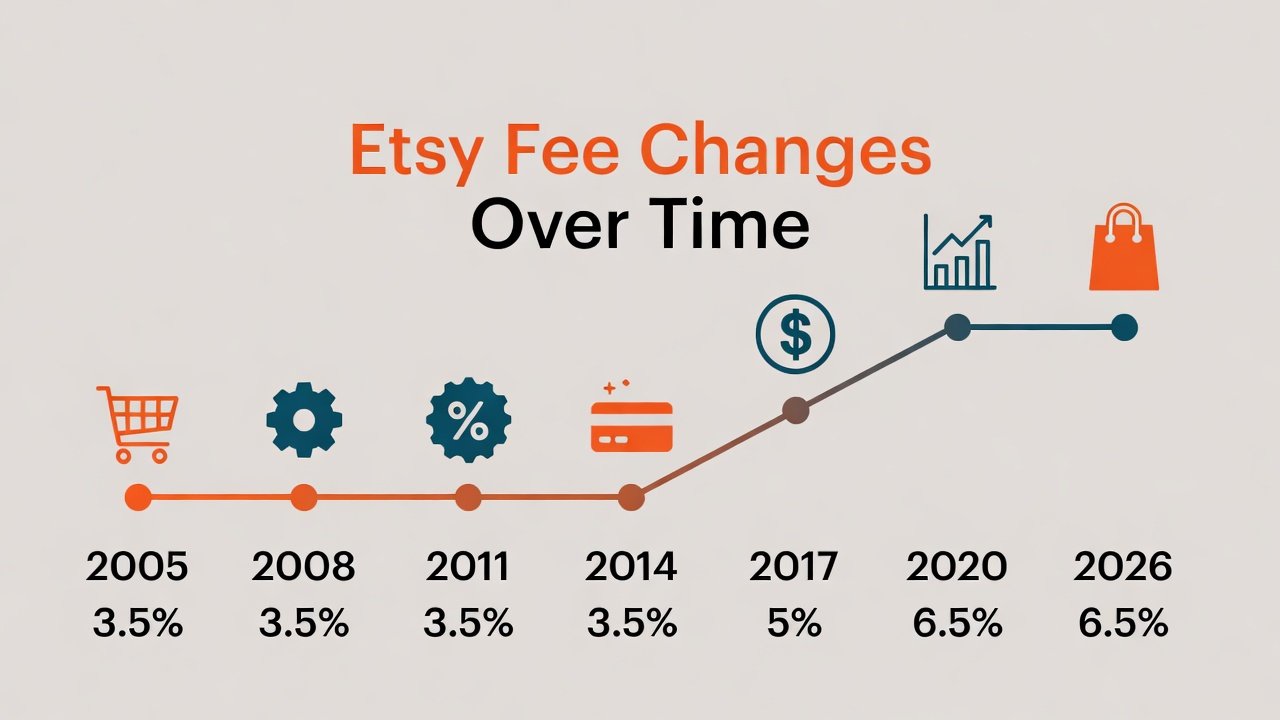
Etsy started in 2005 with very simple fees. Back then, sellers only paid $0.20 to list an item and 3.5% when it sold. Life was simple.
Over the years, Etsy added new services and features. Payment processing, ads, and better seller tools cost money to build. Fees changed to cover these costs.
Understanding this history helps you plan for the future. Fees may change again. Knowing the pattern helps you stay ready.
Etsy Fees in the Early Days (2005-2010)
When Etsy launched, the fee structure was very basic. Sellers paid $0.20 per listing. That listing lasted four months.
When an item sold, Etsy took 3.5% of the sale price. That was it. No payment processing fee because buyers paid sellers directly.
This simple system worked for small shops. But as Etsy grew, they needed better payment security and seller support. Changes were coming.
The First Big Change: 2011-2015
In 2011, Etsy raised the transaction fee from 3.5% to 5%. This was the first major increase. Many sellers were surprised.
Etsy explained the change helped fund new tools. Better search, mobile apps, and customer support cost money to build and maintain.
During this time, Etsy also launched Etsy Payments. This let buyers pay with credit cards. Sellers paid a small processing fee for this convenience.
Major Shifts: 2016-2018
In 2018, Etsy made a big change. The transaction fee jumped from 5% to 5.5%. This affected every sale on the platform.
Etsy also began requiring Etsy Payments in more countries. This meant more sellers paid payment processing fees. The old direct payment option faded away.
These changes helped Etsy improve security and user experience. But they also raised the total cost of selling on the platform.
The 2022 Fee Increase
April 2022 brought a significant change. Etsy raised the transaction fee from 5.5% to 6.5%. This was a full 1% jump.
Etsy said the increase funded new seller tools, better fraud protection, and improved customer support. They also invested in marketing to bring more buyers to the site.
Many sellers adjusted their prices to cover the new fee. Others looked at their costs more carefully. Profit margins got tighter for some shops.
New Fees Added: Regulatory and Offsite Ads
Around 2020-2023, Etsy introduced new fee types. The Regulatory Operating Fee appeared for sellers in certain countries. This small fee covers local compliance costs.
Offsite Ads also became mandatory for some sellers. If Etsy's ads make a sale, they charge 12-15% on top of other fees. High-volume sellers cannot opt out.
These additions made fee tracking more complex. Sellers needed to watch multiple fee lines, not just one or two.
What Changed in 2024-2026?
As of early 2026, the main fees remain stable. The listing fee is still $0.20. The transaction fee stays at 6.5%.
Payment processing rates vary by country but have not seen major increases recently. Etsy has focused on keeping fees predictable.
However, Etsy continues to test new features. Some may come with small fees. Always check official Etsy announcements for updates.
Why Do Fees Increase Over Time?
Running a global marketplace costs more every year. Server costs, staff salaries, and security upgrades all go up with inflation.
Etsy also invests in new tools. Features like pattern websites, shipping labels, and analytics help sellers grow. Building these tools costs money.
Competition is another factor. Etsy competes with Amazon, eBay, and Shopify. They must keep improving to attract and keep sellers and buyers.
How Fee Increases Affect Your Shop
Small fee changes add up over time. A 1% increase on a $50 sale means $0.50 less profit per order. Multiply that by hundreds of sales.
Sellers who track their costs can adjust prices slowly. Those who do not track may lose profit without noticing.
The key is to review your pricing at least twice a year. Check if fees changed. Adjust your prices if needed to stay profitable.
Lessons from Past Fee Changes
Fee increases often come with little warning. Etsy usually announces changes a few weeks ahead. But you must stay alert to official communications.
Sellers who diversified their income survived changes better. Those who sold only on Etsy felt each increase more strongly.
Building a brand outside Etsy helps too. Email lists, social media followers, and repeat customers reduce your reliance on Etsy's traffic.
How to Prepare for Future Fee Changes
You cannot control Etsy's fees. But you can control how you respond. Smart planning protects your profit.
Strategy 1: Price with a Buffer
When setting prices, add a small buffer for future fee changes. If fees rise 0.5%, you will still make profit.
Example: If your costs plus fees equal $25, price at $27.99. The extra $2.99 covers small fee increases or unexpected costs.
Strategy 2: Track All Fees Monthly
Download your Etsy payment report every month. Review each fee line. Know exactly what you pay and why.
Use a simple spreadsheet. List total sales, total fees, and net profit. Watch the trends over time.
Strategy 3: Diversify Your Sales Channels
Do not rely on Etsy alone. Sell at local craft fairs, on Instagram, or through your own website.
If Etsy fees rise sharply, you can shift focus to other channels. Having options gives you power.
What Sellers Wish They Knew Earlier
Many experienced sellers share common advice. Price for profit from day one. Do not compete on price alone.
Track your time as a cost. Your skill and effort have value. Include this in your pricing formula.
Build relationships with customers. Repeat buyers cost less to serve than new ones. Loyalty improves your margins.
Will Fees Keep Rising?
History suggests fees may rise again slowly. Most businesses adjust prices over time to cover rising costs.
But huge sudden jumps are rare. Etsy knows sellers need predictability. Major changes usually come with advance notice.
Stay informed. Follow Etsy's official blog and seller handbook. Do not rely on rumors or social media speculation.
Final Thoughts on Fee History
Etsy fees have grown gradually since 2005. The platform offers more value today than it did twenty years ago. Better tools, more buyers, and stronger security come at a cost.
Successful sellers adapt. They track costs, adjust prices, and diversify income. They focus on making products people love, not just chasing low fees.
You can build a thriving shop under any fee structure. Focus on value, quality, and customer care. These matter more than any single percentage point.
Stay curious. Keep learning. And remember: every successful seller started exactly where you are now. You've got this.