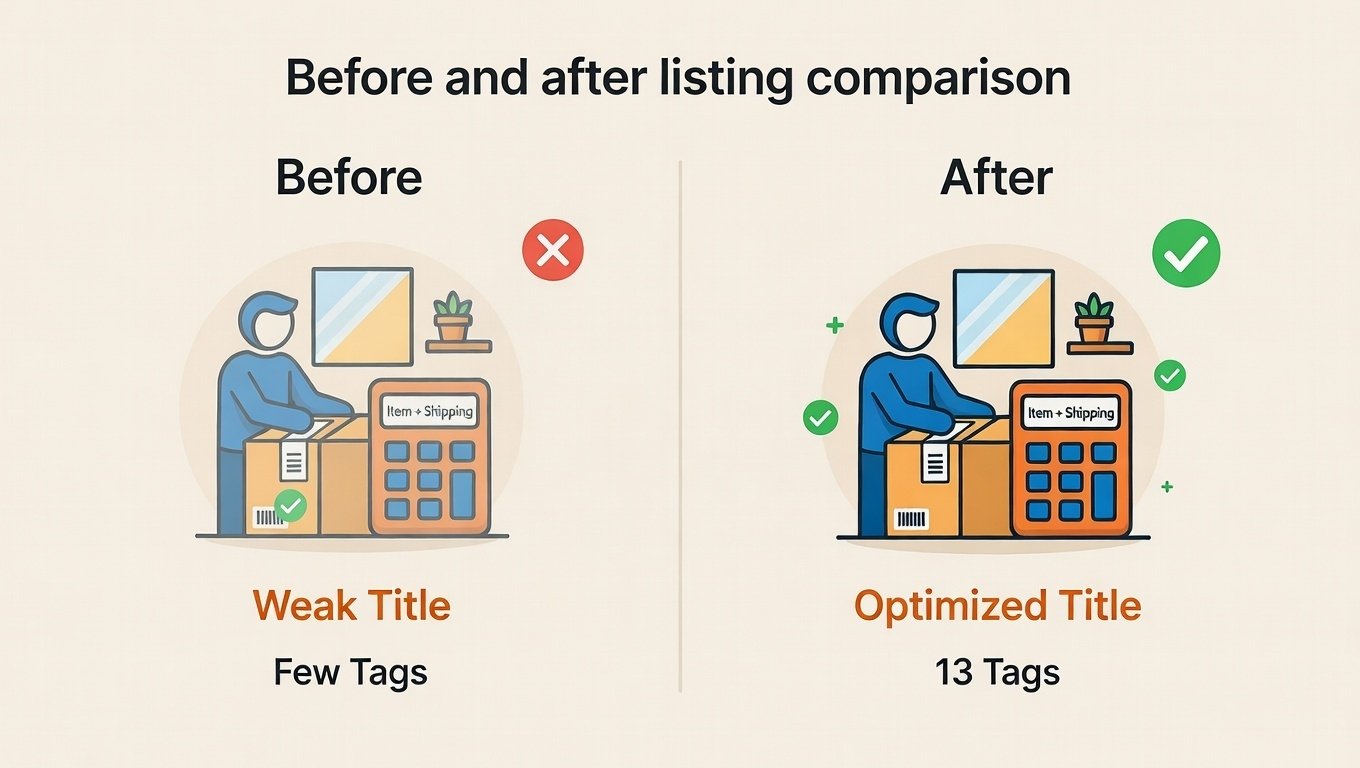
What Is Etsy SEO and Why Does It Matter?
Etsy SEO means making your shop easy to find in search results. SEO stands for Search Engine Optimization. It sounds fancy, but it is really just about using the right words.
When buyers type words into Etsy's search bar, Etsy shows listings that match those words. Good SEO helps your items appear higher in those results.
Higher placement means more views. More views mean more sales. Simple as that.
How Etsy Search Works in 2026
Etsy's search algorithm looks at many signals. The most important ones are your title, tags, and listing quality.
Etsy also checks your shop's performance. Fast shipping, good reviews, and quick replies help your ranking.
Relevance matters most. If a buyer searches "personalized dog collar," Etsy shows listings with those exact words first.
Step 1: Research Keywords Buyers Actually Use
Do not guess what words buyers type. Find out for sure. Start by typing your item into Etsy's search bar.
Watch the autocomplete suggestions. These show popular searches. Write down the phrases that match your item.
Check your competitors too. Look at titles and tags on best-selling listings. Note words that appear often.
Free Tools for Keyword Research
Etsy's own search bar is the best free tool. It shows real buyer behavior.
You can also use the Etsy Seller App. It suggests keywords when you create listings.
Avoid paid tools at first. Master the free options before spending money.
Step 2: Write Strong, Clear Titles
Your title is the most important SEO factor. Put your main keywords at the start.
Use all 140 characters. But keep it readable for humans, not just robots.
Example: Instead of "Pretty Blue Necklace," write "Handmade Blue Beaded Necklace, Sterling Silver Chain, Gift for Her, Birthday Jewelry."
Title Formula That Works
Start with what the item is. Add key features. End with who it is for or when to use it.
Formula: [Main Item] + [Material/Style] + [Use Case/Recipient]
This structure helps both search and shoppers. It answers their questions fast.
Step 3: Use All 13 Tags Wisely
Etsy gives you 13 tags per listing. Use every single one. Unused tags are missed opportunities.
Each tag can be up to 20 characters. Use multi-word phrases when possible. "Gift for mom" works better than just "gift."
Mix broad and specific tags. Include "necklace" and "sterling silver necklace" to catch different searches.
Tag Ideas That Convert
Think like a buyer. What would you type to find your item?
Include: occasion tags (birthday, wedding), recipient tags (gift for her, teacher gift), style tags (boho, minimalist), and material tags (wood, ceramic).
Avoid repeating words from your title. Etsy already sees those. Use tags to add new relevant terms.
Step 4: Write Helpful Descriptions
Descriptions do not affect search ranking as much as titles and tags. But they help convert views into sales.
Answer common questions before buyers ask. Include size, materials, care instructions, and processing time.
Use natural language. Write like you talk. Buyers trust human-sounding descriptions more than robotic ones.
Description Structure That Works
Start with a short, engaging hook. Then list key details in bullet points. End with a friendly note about your process or packaging.
Bullets help shoppers scan fast. Most people do not read long paragraphs on mobile.
Include a call to action. "Message me for custom colors" or "Add to cart to ship today" can boost conversions.
Step 5: Optimize Your Photos for Search
Photos do not directly affect SEO. But they affect clicks and sales. Etsy rewards listings that get clicks and purchases.
Use clear, bright photos. Show your item from multiple angles. Include a photo with a person or object for scale.
Name your photo files with keywords before uploading. "handmade-blue-necklace.jpg" is better than "IMG_1234.jpg."
Photo Checklist for Better Results
First photo: Clean, well-lit main shot on neutral background.
Photos 2-4: Different angles, close-ups of details, lifestyle shot showing size or use.
Last photo: Your shop logo or a thank-you note to build brand trust.
Good photos keep buyers on your listing longer. Etsy notices this and may boost your ranking.
Step 6: Keep Your Shop Active and Fresh
Etsy favors shops that list new items regularly. Adding one listing per week helps more than adding 20 once a year.
Renew stale listings occasionally. A fresh renewal can give a small search boost.
Update old listings with new keywords or photos. Small tweaks can revive slow-moving items.
Simple Maintenance Routine
Once a week: Add or renew one listing. Reply to all messages within 24 hours.
Once a month: Review your best and worst performers. Adjust titles or tags on low-view items.
Every 3 months: Check Etsy's Seller Handbook for SEO updates. Algorithms change over time.
Common SEO Mistakes to Avoid
Even experienced sellers make these errors. Learn from them and save time.
Mistake 1: Keyword Stuffing
Do not repeat the same word many times. "Necklace necklace blue necklace gift" looks spammy and hurts your ranking.
Write for humans first. Use keywords naturally in sentences. Etsy's algorithm is smart enough to understand context.
Mistake 2: Ignoring Mobile Shoppers
Most Etsy buyers use the app. Keep titles and descriptions short and scannable.
Long paragraphs get cut off on mobile. Put key info at the top. Use bullet points for details.
Mistake 3: Copying Competitors Exactly
Research is good. Copying is not. Etsy may flag duplicate content. Plus, your item is unique. Your words should be too.
Use competitor research for inspiration. Then write your own titles and descriptions in your voice.
Mistake 4: Setting and Forgetting
SEO is not a one-time task. Buyer searches change. Trends shift. Etsy updates its algorithm.
Review your top listings every few months. Refresh keywords based on current search trends.
How to Track Your SEO Progress
Etsy provides free stats in Shop Manager. Use them to see what works.
Check "Listings" to see which items get the most views. Note their titles and tags. Do more of what works.
Look at "Search terms" in your stats. This shows what words buyers typed to find your shop. Add these words to other listings.
Simple Tracking Spreadsheet
Create a basic sheet with columns: Listing Name, Main Keywords, Views Last 30 Days, Sales Last 30 Days.
Update it monthly. Spot patterns. Double down on winning keywords. Fix or retire underperformers.
Tracking takes 10 minutes a month. It saves hours of guessing later.
SEO Tips for New Shops
Starting from zero? Focus on these basics first.
Choose a narrow niche. "Personalized cat portraits" ranks easier than just "art prints."
Optimize your first 10 listings perfectly. Quality beats quantity. Ten strong listings beat fifty weak ones.
Ask friends to search for your items. Can they find you? If not, adjust your keywords.
Advanced SEO Tactics for Growing Shops
Once you have sales and reviews, try these next-level moves.
Use long-tail keywords. "Personalized dog collar with name and phone number" has less competition than "dog collar."
Create listings for seasons and holidays early. List "Christmas ornament" in September to catch early shoppers.
Encourage reviews. Positive reviews boost your ranking. Include a thank-you note asking happy buyers to leave feedback.
Final SEO Checklist for 2026
Before you publish or update a listing, confirm these points:
- My title starts with main keywords and uses all 140 characters
- I used all 13 tags with multi-word phrases
- My description answers common questions and includes a call to action
- My photos are bright, clear, and show scale
- My shop processes orders quickly and replies to messages fast
- I reviewed Etsy's latest SEO tips in the Seller Handbook
If you checked most boxes, your listing is optimized. Publish with confidence.
Final Thoughts on Etsy SEO
SEO is not magic. It is just about using the right words in the right places. Start simple. Improve over time.
Focus on helping buyers find and love your items. Good SEO serves people, not just algorithms.
Track your results. Learn from what works. Adjust what does not.
You do not need to be perfect. You just need to start. One optimized listing at a time, you will grow your shop.
Keep creating. Keep learning. And keep showing your unique work to the buyers who are searching for it.
Pro Tip: Save your best-performing titles and tags in a note. Use them as templates for new listings. Consistency builds momentum.